
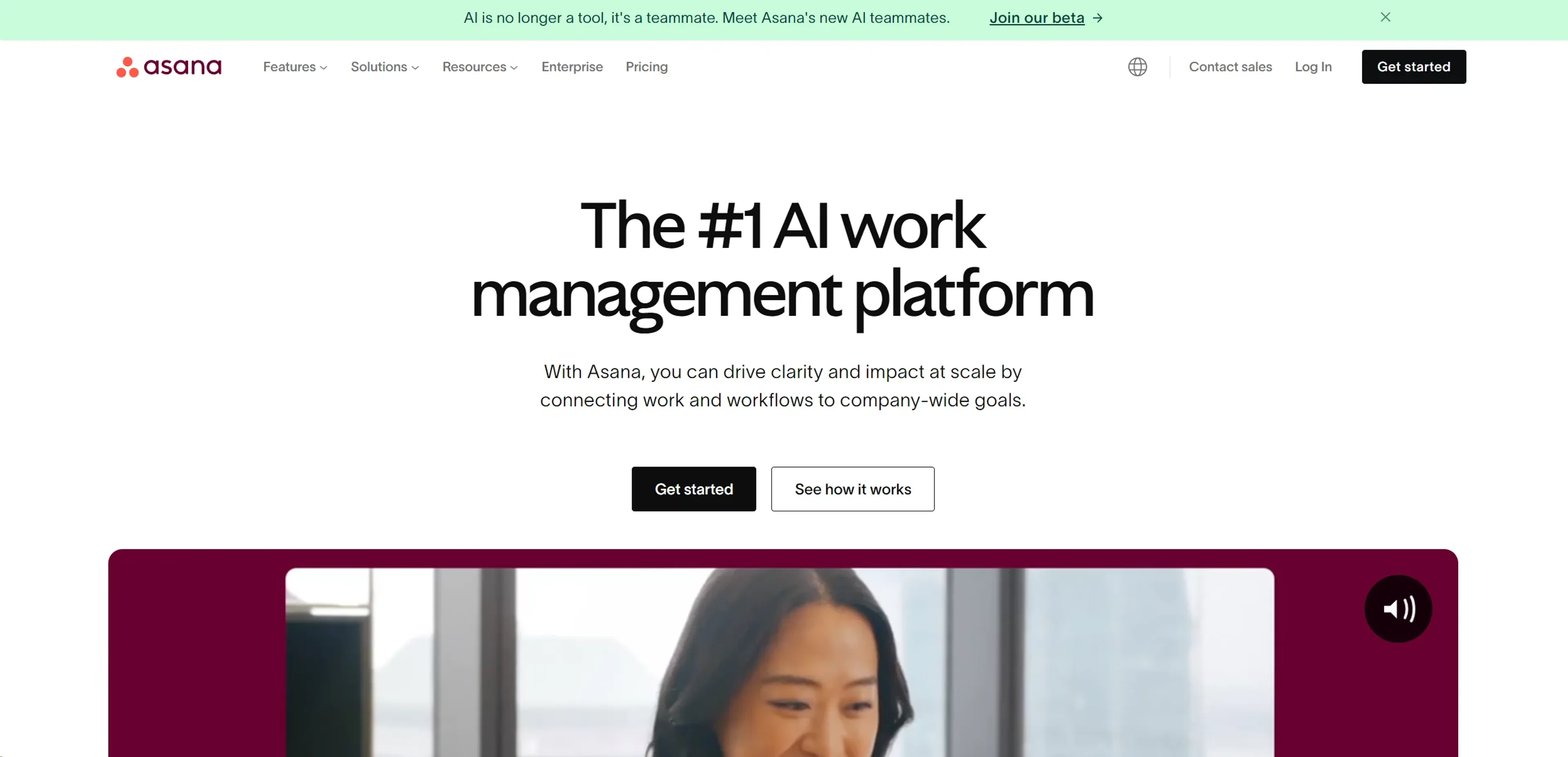
About Asana
Asana is a work management platform that helps teams organize projects, assign tasks, set deadlines, and track progress in real time. Its AI capabilities automate routine work and deliver predictive insights, while rules and forms streamline processes across departments. With over 300 integrations, Asana fits into existing enterprise workflows and scales from startups to large organizations. It is used by marketing, operations, IT, and product teams for campaign timelines, process oversight, request management, and roadmaps. Detailed dashboards and reporting support better decision-making and resource management.
Key Features
- Project Management: Asana allows teams to create projects, set deadlines, assign tasks, and track progress in real-time.
- Asana AI: Integrating AI capabilities, Asana aids in automating routine tasks and providing predictive insights, making it easier to manage complex projects.
- Workflows and Automation: Features like rules and forms streamline processes, reducing manual effort and helping teams focus on critical tasks.
- Compatibility with Over 300 Integrations: Asana seamlessly connects with other enterprise tools, enhancing its utility without disrupting existing workflows.
Pricing Details
- Free Tier: Provides basic functionalities for individuals and teams just getting started.
- Premium Plan: Starts at $10.99 per user per month, offering additional features like advanced search and custom fields.
Pros
- Enhanced Collaboration: Facilitates team communication and collaboration across departments and locations.
- Scalability: Adapts to a wide range of business sizes, from small startups to large enterprises.
- Real-Time Updates: Keeps everyone informed with the latest changes and progress on projects.
- Comprehensive Reporting Tools: Offers detailed reports and dashboards for better decision-making and resource management.
Cons
- Learning Curve: New users may require some time to fully utilize all features.
- Cost for Premium Features: While Asana offers a basic free version, advanced features come at a cost.
- Overwhelming for Small Projects: Sometimes, the extensive functionalities can be more than what's needed for simpler projects.
Use Cases
- Marketing Teams: Use Asana to manage campaign timelines, creative content, and collaboration.
- Operations Managers: Leverage the tool for streamlining processes and maintaining oversight of various operational tasks.
- IT Departments: Utilize Asana for managing IT requests, automating routine tasks, and enhancing team coordination.
- Product Managers: Employ Asana for product roadmaps, launch plans, and cross-functional team coordination.
- Uncommon Use Cases: Nonprofits utilize Asana to manage volunteers and fundraising activities; educational institutions use it for administrative coordination and project-based learning.